Overview
Polygon is one of the largest scaling networks on Ethereum, with billions of POL tokens secured through native staking. By 2026, around 3.6 billion POL was staked across the network, but only a few percent of that capital was liquid. The other side of the protocol - the staking experience itself - had grown organically and needed a redesign before a new primitive could land on top of it.
I led design across two interrelated programs at the same time: a redesign of the existing Polygon Staking experience, and the new Polygon Liquid Staking app that introduces sPOL, Polygon's native liquid staking token.
Role: Lead Designer, Polygon Staking + Liquid Staking. Tenure: contractor in 2025, full-time from August 2025.
Role
Full ownership across UX research, UX design, and visual UI on both surfaces. Research informed the design. Design informed the UI. Nothing got lost in handoff between phases because the same person carried it across.
In practice that meant interviewing stakers, mapping the failure modes in the legacy flow, designing the new patterns, building the UI to spec, and shipping with engineering.
The problem
Two tracks running in parallel. The existing Polygon Staking experience needed to be improved on its own terms - clearer information architecture, better validator selection, less anxiety in stake and unstake. At the same time, a new product - Polygon Liquid Staking, the official home for sPOL - had to be designed and shipped.
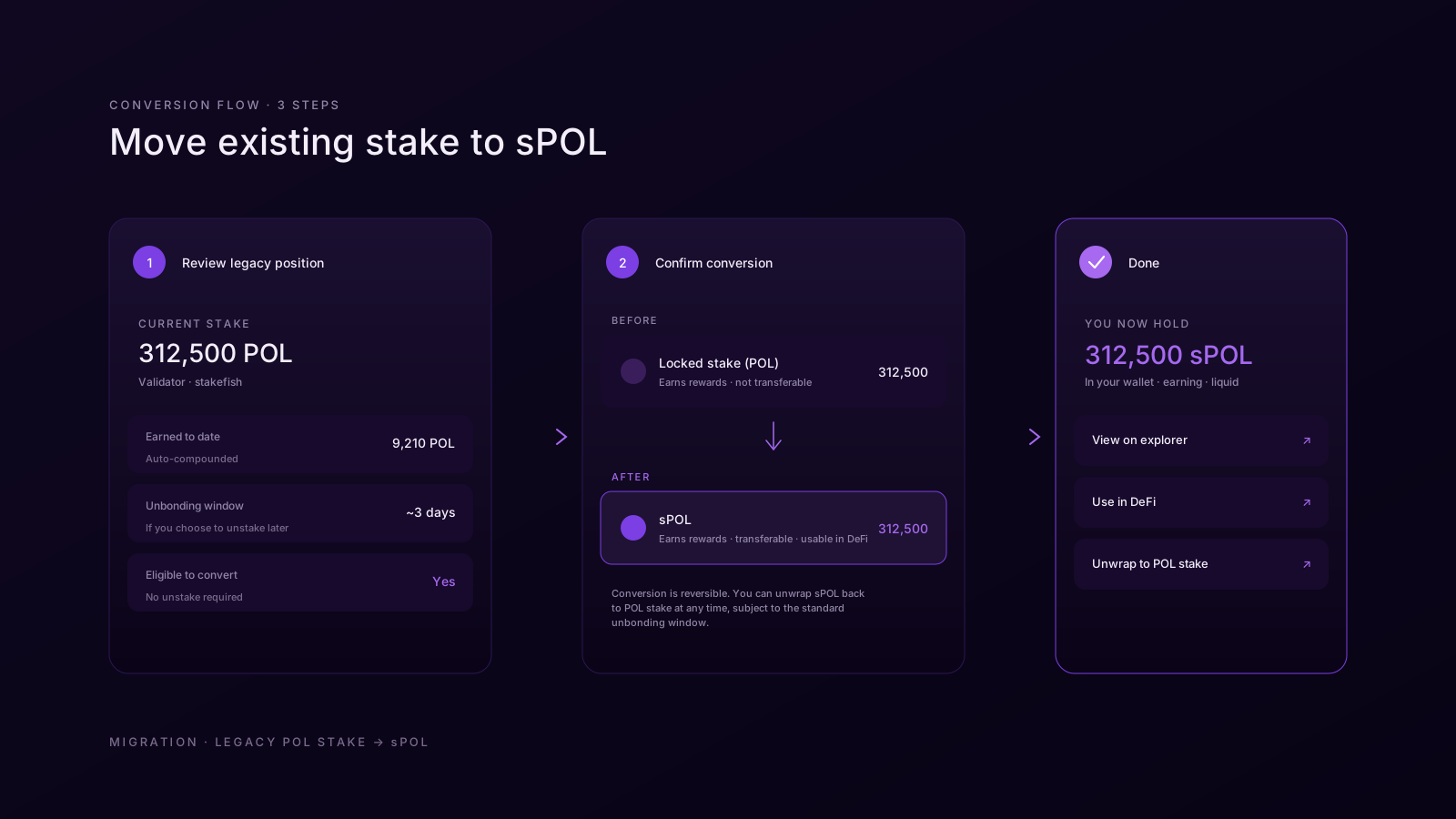
The load-bearing piece was migration. Most of the wallets that would care about sPOL already had a stake. Their POL was bonded to a validator, earning rewards, locked behind an unbonding window. The conversion flow had to make a complex on-chain operation feel clear, low-anxiety, and reversible. Get that wrong and users either don't convert (the new product fails to gather TVL) or they do convert and panic about it (worse).
The two tracks weren't independent. A redesigned validator picker had to appear in both places and behave the same way. The mental model of "stake" had to extend cleanly to "stake plus transferable receipt." Treating them as one connected surface, not two unrelated products, was the bet.
What shipped
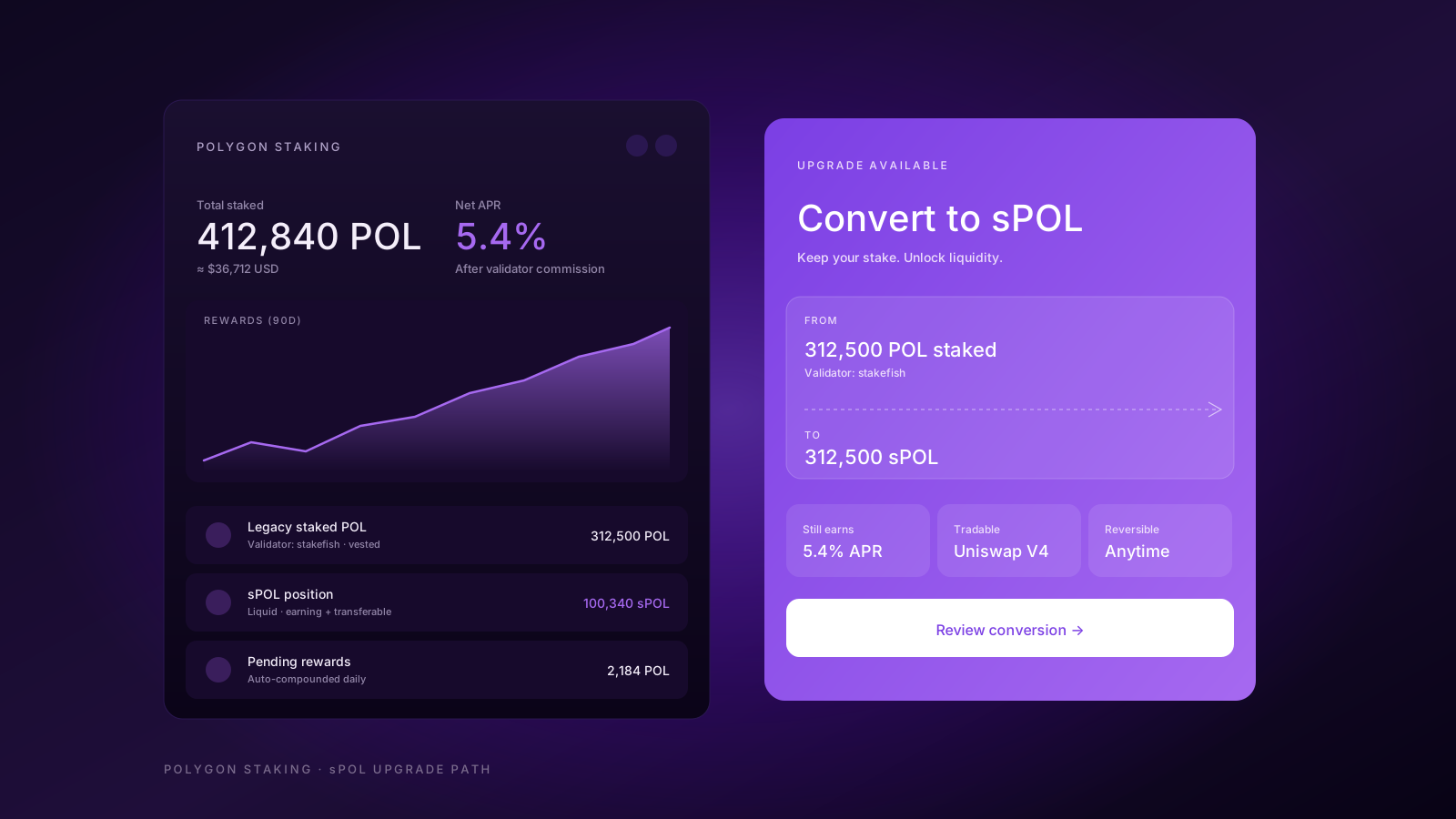
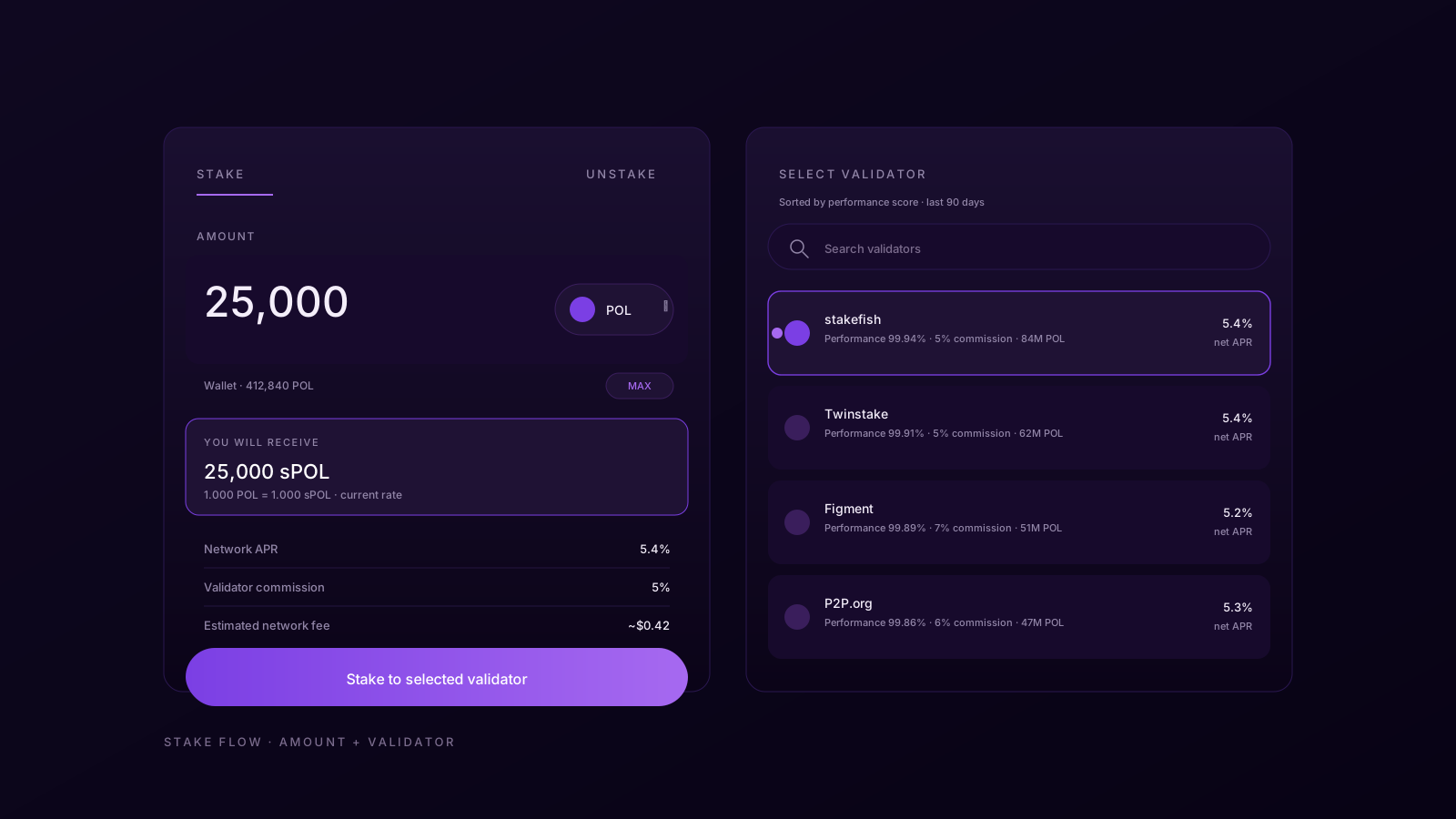
The redesigned Polygon Staking experience, live at staking.polygon.technology: portfolio overview, validator selection, and the stake and unstake flows.
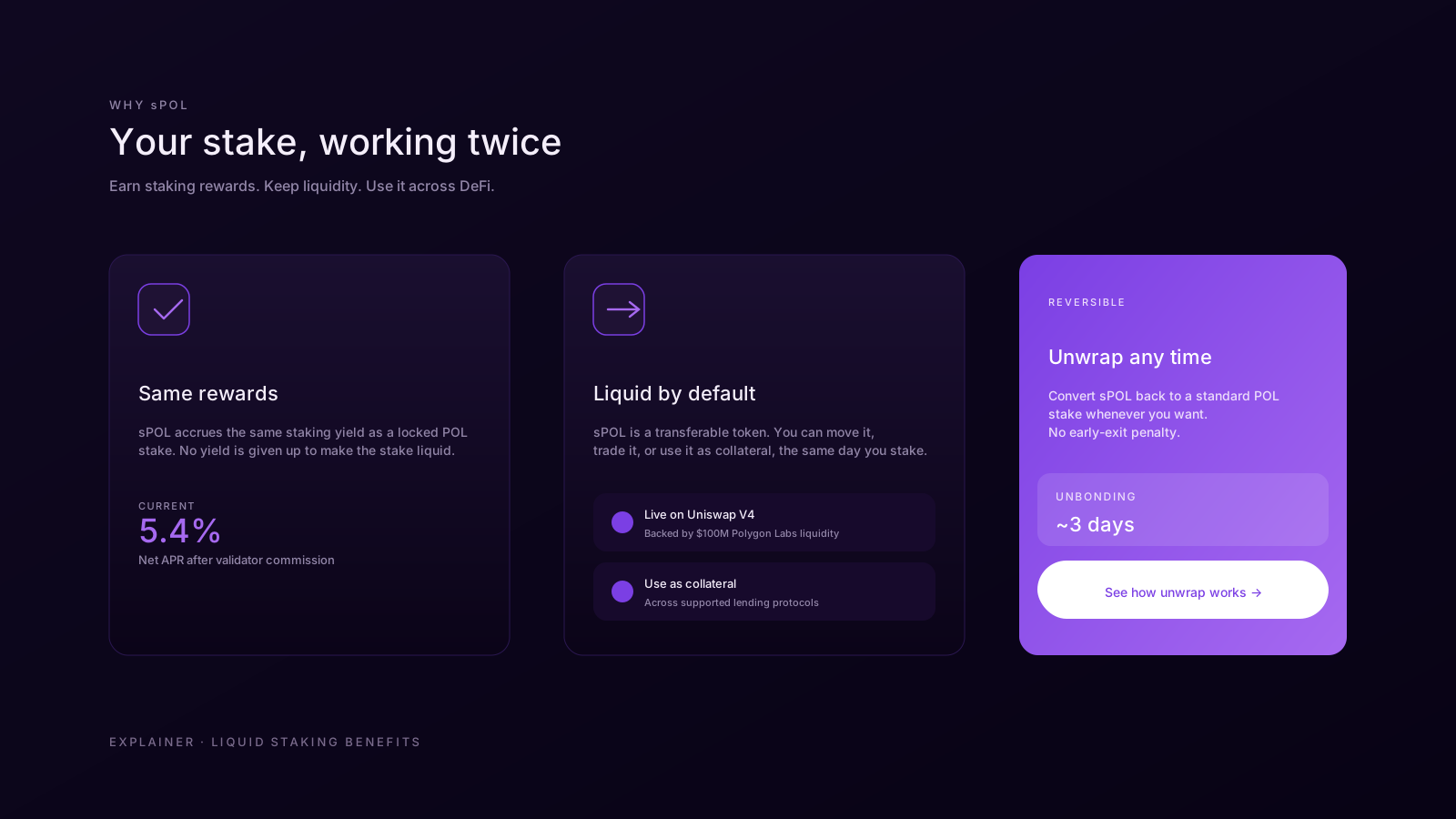
The new Polygon Liquid Staking app with the sPOL conversion flow: convert a legacy POL stake to sPOL without unbonding, unwrap sPOL back into a standard stake whenever you want.
Underneath both surfaces, a shared validator picker, a shared balance model, and a shared reward accounting pattern, so the two products feel like one staking system.
Outcomes
sPOL launched on April 14, 2026, with a $100M liquidity commitment from Polygon Labs and live Uniswap V4 pools at launch.
The launch targets roughly 3.6 billion POL of previously idle staked capital, valued at about $330M, and brings that capital into DeFi while preserving staking rewards.
Polygon's DeFi TVL crossed $1.27B around the launch period. Both the redesigned Polygon Staking experience and the Polygon Liquid Staking app are in production today.
A note on assets
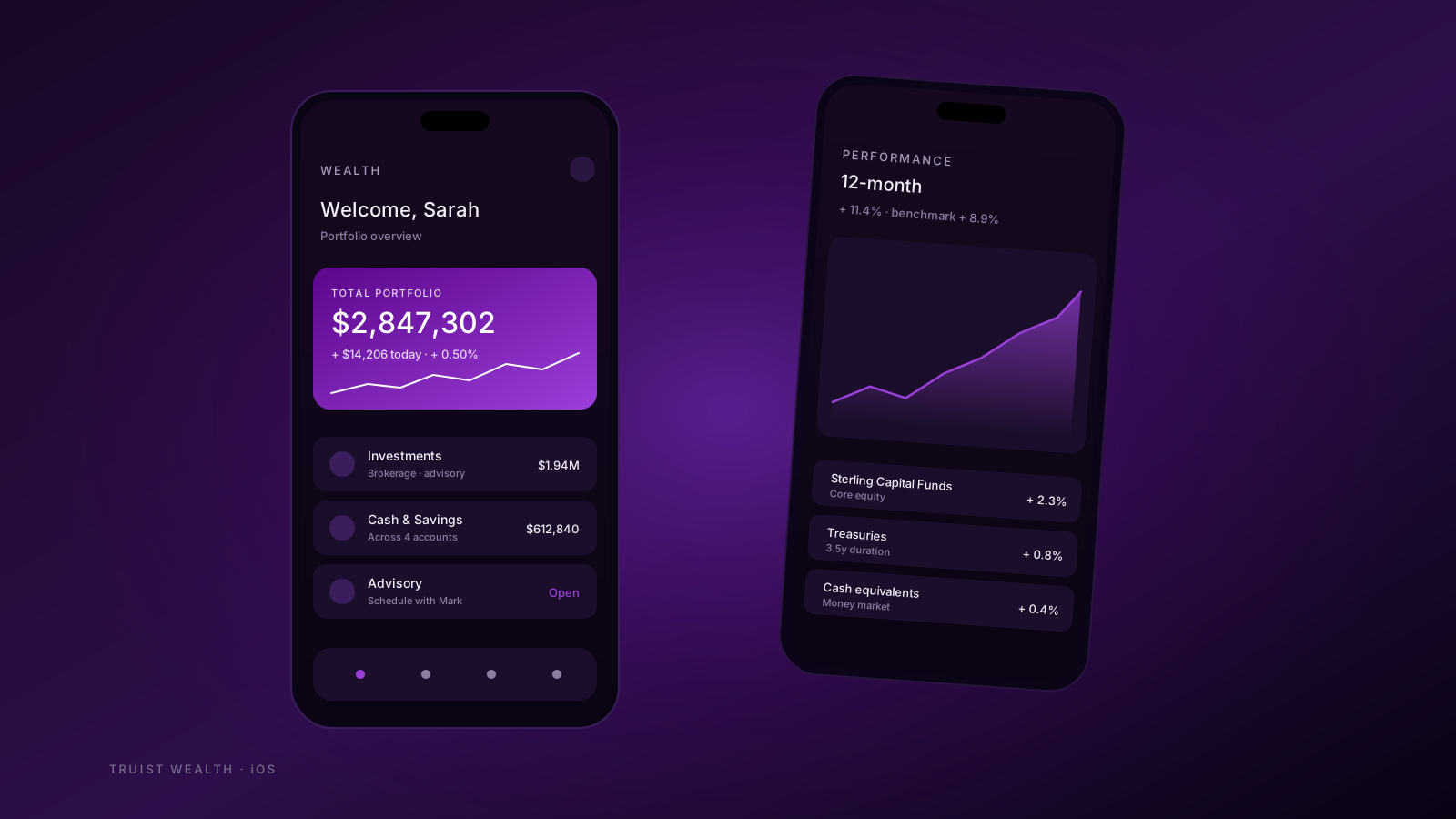
Framer and Figma source files exist on a work machine and will be added in a later pass. The visuals shown here are placeholders representing the design direction and the shape of the flows, not the shipped UI.